

-Watch this short video featuring the real story of Phyllis, a 90-year-old widow who lost $20,000 to a tech support scam. It shows exactly how the scam started with a fake computer alert and explains the tactics scammers use to pressure seniors. This is a powerful example of why it’s so important to never give remote access to your computer to someone who contacts you unexpectedly.
Practical Cybersecurity & Scam Awareness Tips
Why Staying Informed Protects What Matters Most
Technology keeps us connected with family, helps manage health, and brings entertainment into our homes. Unfortunately, scammers specifically target older adults because of their trust and kindness. The good news? Most scams are easy to spot once you know the common tricks. At Savvy at 60, we’ve put together this simple guide so you and your loved ones can stay protected without stress
The Grandparent / Family Emergency Scam
Scammers call or text pretending to be your grandchild, niece, nephew, or another family member. They claim they’re in trouble — in a car accident, arrested, or stranded in another country — and urgently need money. They often use AI to sound exactly like your loved one and beg you not to tell anyone else in the family.
Investment Fraud/ Fake Investment Offers
Scammers contact you with “once-in-a-lifetime” investment opportunities, often involving stocks, fake trading platforms or cryptocurrency. They may show you fake account balances that appear to grow quickly, then pressure you to invest more or move money to “protect” your gains. These scams frequently use high-pressure tactics and can lead to total loss of the money invested
Tech Support Scam Awareness
Scammers contact you by phone or through a pop-up on your computer or phone, claiming your device has a virus, is hacked, or needs urgent repair. They often pretend to be from well-known companies like Microsoft, Apple, or your internet provider. Their goal is to get remote access to your device or trick you into paying for fake “fixes.”
Government Imposter Scams (IRS, Social Security, Medicare)
Scammers pretend to be from government agencies such as the IRS, Social Security Administration, or Medicare. They threaten you with arrest, fines, loss of benefits, or deportation unless you pay immediately or share personal information. These calls often use spoofed phone numbers that look official.
“Helping Southern California seniors stay safe and connected” - Savvy at 60
How to Spot a Scam – Red Flags
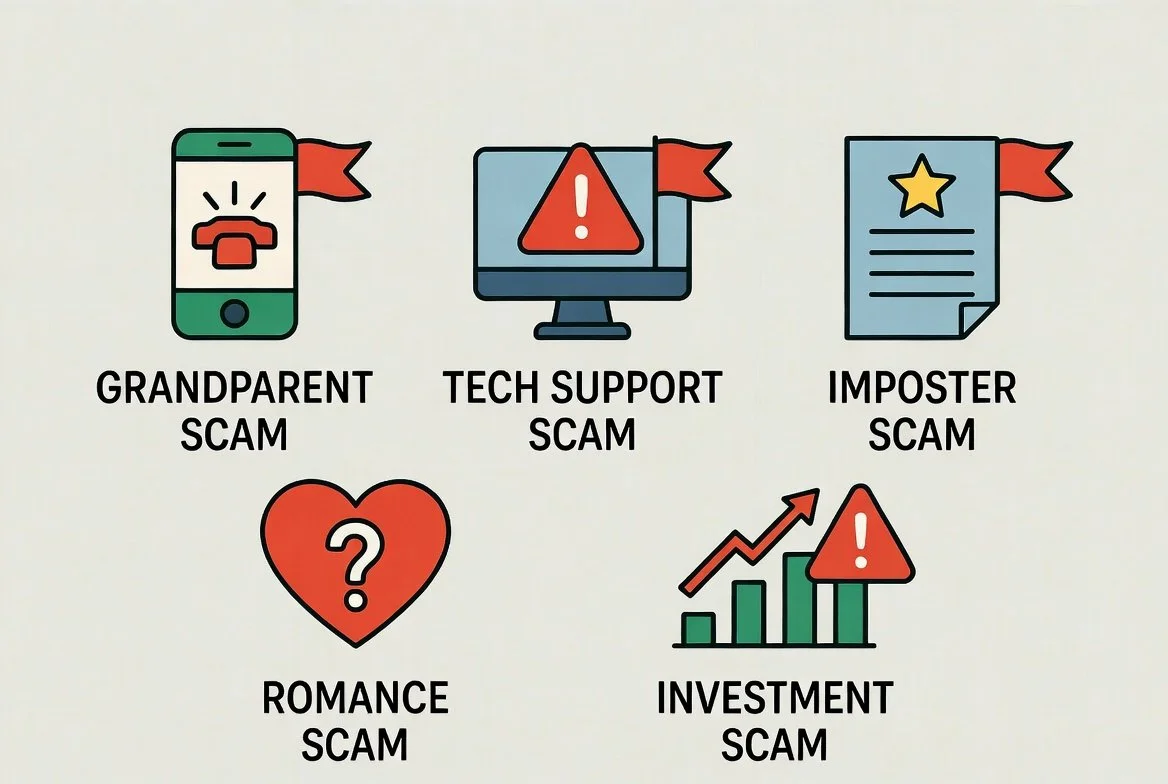
The caller says a family member is in serious trouble and needs money right away, often claiming they can’t call you themselves.
They ask you to keep the situation secret and pressure you to act immediately without checking with anyone else.
They request payment through gift cards, wire transfers, cryptocurrency, or by loading money onto a prepaid card.
You receive an unexpected call or see a pop-up warning that your computer or phone has a serious problem that must be fixed immediately.
The caller asks for remote access to your device or tells you to download software so they can “help” you.
The caller claims to be from the IRS, Social Security, or Medicare and says you owe money or that your benefits will be stopped.
They create a sense of panic by threatening arrest, jail time, or serious legal trouble if you don’t act right away.
They ask for personal information like your Social Security number, bank details, or payment methods.
Someone contacts you with an investment opportunity that promises unusually high or guaranteed returns with little or no risk.
They pressure you to act quickly or invest more money to “lock in” gains or avoid losing what you’ve already put in.
Get In Touch
If you're interested in working with us, complete the form with a few details about your project. We'll review your message and get back to you within 48 hours.